Back to Blog Home Page

Baby Boomers first started entering the job market in the 1960s.
Gen Z? They’re entering the job market as we speak.
Today’s workforce is made up of four very distinct, and often, very different generations—Baby Boomers, Gen X, Millennials, and Gen Z. And while they may be facing the same market conditions, they certainly aren’t experiencing them in the same way.
And that difference is creating a telling divide.
According to the 2026 Job Seeker Nation report, these generational differences aren’t just one-off. They span the entire hiring process—from perspectives on AI to communication, flexibility, and even whether they’re willing to accept a job offer in the first place.
And hiring managers? Need to be paying close attention to what’s resonating and what’s quietly (or not so quietly) pushing candidates away.
In this blog, we’ll break down how each generation differs across some of the biggest topics shaping hiring right now—and what talent leaders and hiring managers can do to keep the hiring experience from feeling out of touch.
Offer Accepted? Not So Fast.
While the overall percentage of candidates declining job offers dipped slightly from 23% down to 20% in 2026, the more interesting and telling story starts to emerge once you break the data down by each generation.
The Generational Breakdown
- Gen Z: Highest offer decline rate at 31%
- Millennials: 22% declined a job offer
- Gen X: 15% declined a job offer
- Baby Boomers: Lowest decline rate at 9%
What it All Means
Even in a tougher market, younger generations are still willing to walk away when the juice doesn’t feel worth the squeeze.
That’s a meaningful signal for recruiters—especially in what’s currently considered an employer’s market.
So, what makes candidates who are more prone to a “no” shift their tune to a “yes”?
Here’s what we found:
Today’s candidates are paying close attention to communication. Process transparency. Flexibility. Growth opportunities. Whether the interview experience feels organized, easy, and straightforward. And ultimately, whether the company actually feels authentic to how it represents itself publicly.
The offer letter (and compensation) still matters. But the experience leading up to it matters more than many organizations realize.
The Hiring Fix
A competitive salary can’t be the band-aid for a poor hiring experience. Your candidates want (and expect) a hiring process that feels smooth, aligned, easy, and human. And if you’re not delivering? They’ll find an employer who can.
Short-Term: Audit your hiring process like a candidate would. Look out for long timelines, vague communication, repetitive interviews, and unclear expectations that might create friction.
Long-Term: Invest in technology that not only helps your team recruit faster and more efficiently, but actually improves the candidate experience, too. The right tools should reduce friction, strengthen communication, and make the hiring process feel smoother, easier, and more human from start to finish.
AI Is Shaping Candidate Trust Differently Across Generations
You can’t open LinkedIn or scroll through your favorite HR or TA forum without seeing two letters: AI.
Artificial intelligence has quickly become the shiny new tech that every team (HR or otherwise) can’t stop talking about.
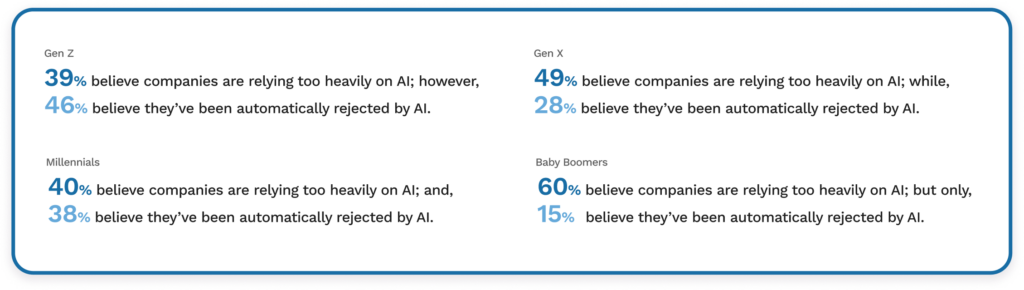
But here’s the thing, while employers may be focused on efficiency gains—faster resume reviews, automated workflows, better interviews, streamlined scheduling—candidates are having a much more tenuous reaction to the AI era.
The Generational Breakdown
What It All Means
The divide here is pretty telling.
Younger candidates are much more likely to believe they’ve been automatically rejected by AI—with zero human intervention—but find general AI use more acceptable. Older generations, on the other hand, are more skeptical about how heavily companies are relying on AI overall but don’t seem to be under the impression this reliance has resulted in AI auto-rejections.
The takeaway? Comfort with technology doesn’t automatically equate to trust.
But there’s the thing candidates across every generation seem to agree on: they want human involvement in the process.
Candidates don’t want to feel like their fate is being left up to some Wizard of Oz-style robot making decisions behind a curtain. They want clarity around how AI is being used, where humans are involved, and what actually happens after they hit apply.
The Hiring Fix
Perception matters here just as much as reality.
Even if AI isn’t making final decisions, candidates who feel like they’re being filtered out by robots may start distrusting the hiring process altogether. And once trust starts breaking down, candidate experience usually follows right behind it.
Short-Term: Be open about where AI is used in the hiring process. In your first conversation, let the candidates in on the how, when, and why AI is used. So, your candidates don’t have to guess.
Long-Term: Develop clear, visible guidelines around how AI supports hiring, where oversight exists, and how fairness and accountability are maintained throughout the process. And share those guidelines—on your website, on your careers page, during your interviews.
Bonus: Include clear expectations around how candidates can use AI throughout the hiring process—so the line between acceptable support and outright fraud doesn’t feel blurry for anyone involved.
Hiring Friction Hits Every Generation Differently
Every candidate says they want an easy and efficient hiring process. But it turns out, the definition of “efficient” means very different things depending on who you ask.
What feels modern and convenient to one candidate may be the very reason another candidate walks away entirely.
The Generational Breakdown
- Gen Z: 37% said they would abandon an application if it took too long—the highest rate of any generation.
- Millennials: Prioritized easy applications (49%), easy interview scheduling (43%), and strong recruiter communication (38%) as key drivers of a positive candidate experience.
- Gen X: More likely to walk away if asked to complete a skills assessment after applying (15%, compared to just 10% of Millennials and 7% of Gen Z).
- Baby Boomers: The only generation that didn’t rank an easy application process as the most important part of a positive experience. Instead, personal conversation mattered more (46%).
What It Means
Today’s hiring teams are stuck in a difficult balancing act. On one side, candidate fraud is pushing employers to add more skills assessments, screenings, and validation steps to uncover stronger hiring signals. On the other, candidate experience still matters—and too much friction can quickly push talent away.
And here’s where it gets really tricky: candidates across generations don’t all experience these hiring changes the same way.
Younger generations often expect fast, tech-enabled experiences and tend to be more open to alternative evaluation methods—provided the process feels relevant and streamlined.
Older generations, meanwhile, are generally less tolerant of extra complexity that feels disconnected from the actual role. For many experienced candidates, any unnecessary friction doesn’t signal rigor. It signals inefficiency.
The Hiring Fix
The answer isn’t eliminating every assessment, screening step, or layer of validation. It’s making sure every step feels purposeful.
Candidates are far more willing to engage when they understand why something exists and how it connects to the role itself.
Short-Term: Communicate the “why” behind your hiring process. A quick explanation around assessments, verification steps, or interview stages can go a long way in reducing candidate skepticism and drop-off.
Long-Term: Shift from adding more hiring steps to building smarter ones (think Swiss Cheese). The strongest hiring processes collect better signals earlier, reduce unnecessary repetition, and create trust on both sides of the interview table—or Zoom call.
Beyond the Basics: What Generations Want from Their Benefits
Salary and flexibility still matter, of course. But candidates are increasingly evaluating employers based on the support and benefits they provide beyond compensation alone.
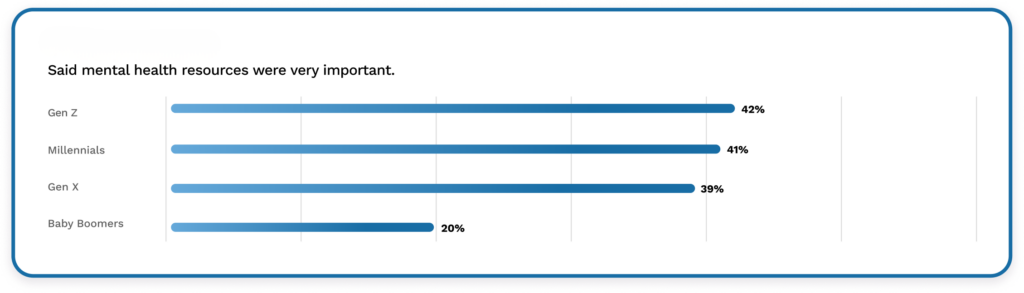
And few areas highlight the generational divide more clearly than mental health support.
The Generational Breakdown
What It Means
That gap reflects more than just changing benefit preferences. It reflects a broader shift in how different generations think about work itself.
For younger candidates, mental health support is increasingly viewed as part of the core employee experience—not simply an extra perk added onto a benefits package.
Meanwhile, older generations may still place greater emphasis on traditional markers of workplace stability and security.
The Hiring Fix
Benefits packages are no longer being evaluated solely on compensation, healthcare, or retirement plans. Candidates increasingly want to understand how employers support employees in their day to day—beyond the table stakes.
Short-Term: Highlight wellbeing benefits clearly throughout the hiring process—not just on the careers page. Take a moment to dive into what makes your total rewards package unique and how you support your employees with the benefits that matter to them.
Long-Term: Regularly evaluate benefits and wellbeing programs using employee feedback. The strongest employers evolve their offerings alongside changing employee expectations. Check out this example for a look at how top organizations are taking steps to match employees’ shifting needs.
A Wake-Up Call from the Candidates
Today’s hiring market isn’t just divided by skills or experience. It’s divided by expectations.
What keeps a Gen Z candidate engaged in the hiring process may not resonate the same way with a Gen X professional.
But one thing candidates across the generations DO have in common? They’re paying closer attention to the hiring process itself.
They’re noticing how communication feels. Whether interviews seem intentional or dragged out. Whether companies actually follow through on the culture and values they promote online.
And those moments matter more than employers may realize.
Because increasingly, candidates aren’t just evaluating the role. They’re evaluating whether the experience feels worth investing their time, energy, and trust in the first place. And if it doesn’t? They’re checking out before the offer letter even hits their inbox.
The organizations that understand both these generational trends and individual candidate expectations—and build hiring experiences that feel clear, thoughtful, and human because of it—will have a much easier time standing out in a crowded market. And earning the trust of top talent along the way.
Want the full breakdown of the candidate trends, generational insights, and hiring data shaping 2026? Download your copy of Job Seeker Nation.